


The Hunchback of Notre-Dame Tour
Notre-Dame Cathedral and Medieval Paris
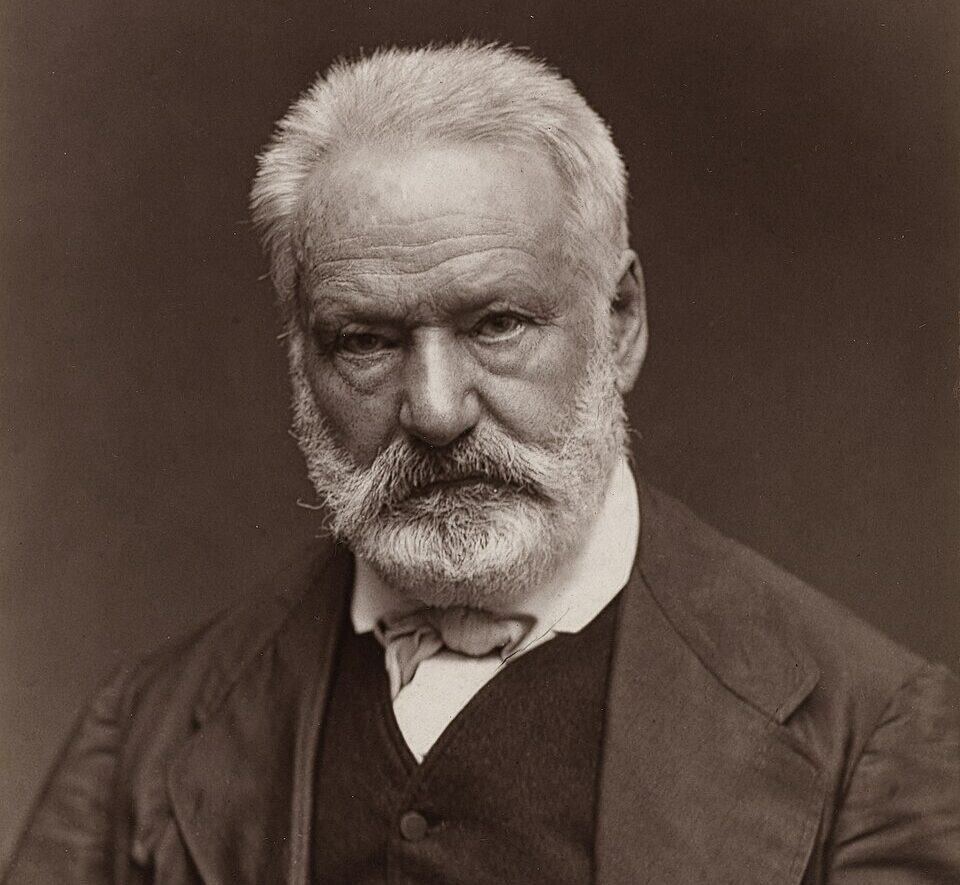
In 1831, Victor Hugo published his new novel, The Hunchback of Notre-Dame. It was an immediate literary success. And with good reason: alongside his gift for bringing characters to life, Hugo was already one of the most celebrated writers of the first half of the nineteenth century.
Yet it was not simply a passion for writing that inspired the Romantic author to create his novel. Above all, he was driven by a desire to preserve France’s architectural heritage. Victor Hugo was perhaps the French writer most devoted to protecting his country’s medieval heritage, and Paris’s in particular. The Hunchback of Notre-Dame is both an ode to the Gothic Paris of a bygone age and a plea for its preservation.
This raises an intriguing question: what remained of medieval Paris in Victor Hugo’s time, and what can we still discover of that world today?
The Tour
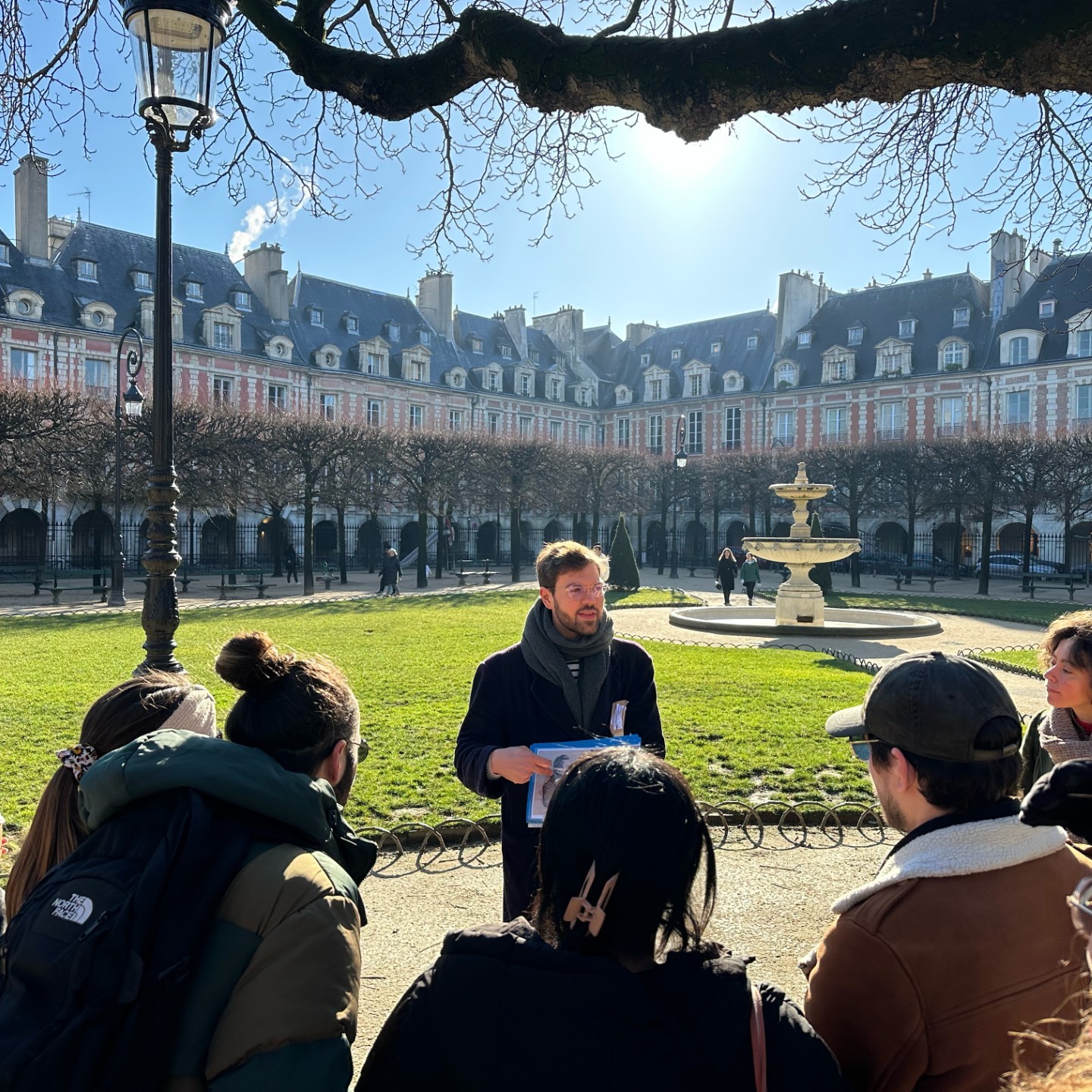
This tour offers a blend of literary discovery and an exploration of the Marais’s medieval heritage. As we bring Hugo’s words to life in the neighbourhood’s streets, passageways and courtyards, we’ll set out to find the medieval treasures he deliberately scattered throughout his novel. You’ll discover how The Hunchback of Notre-Dame can still help us see the Marais in a whole new light today.
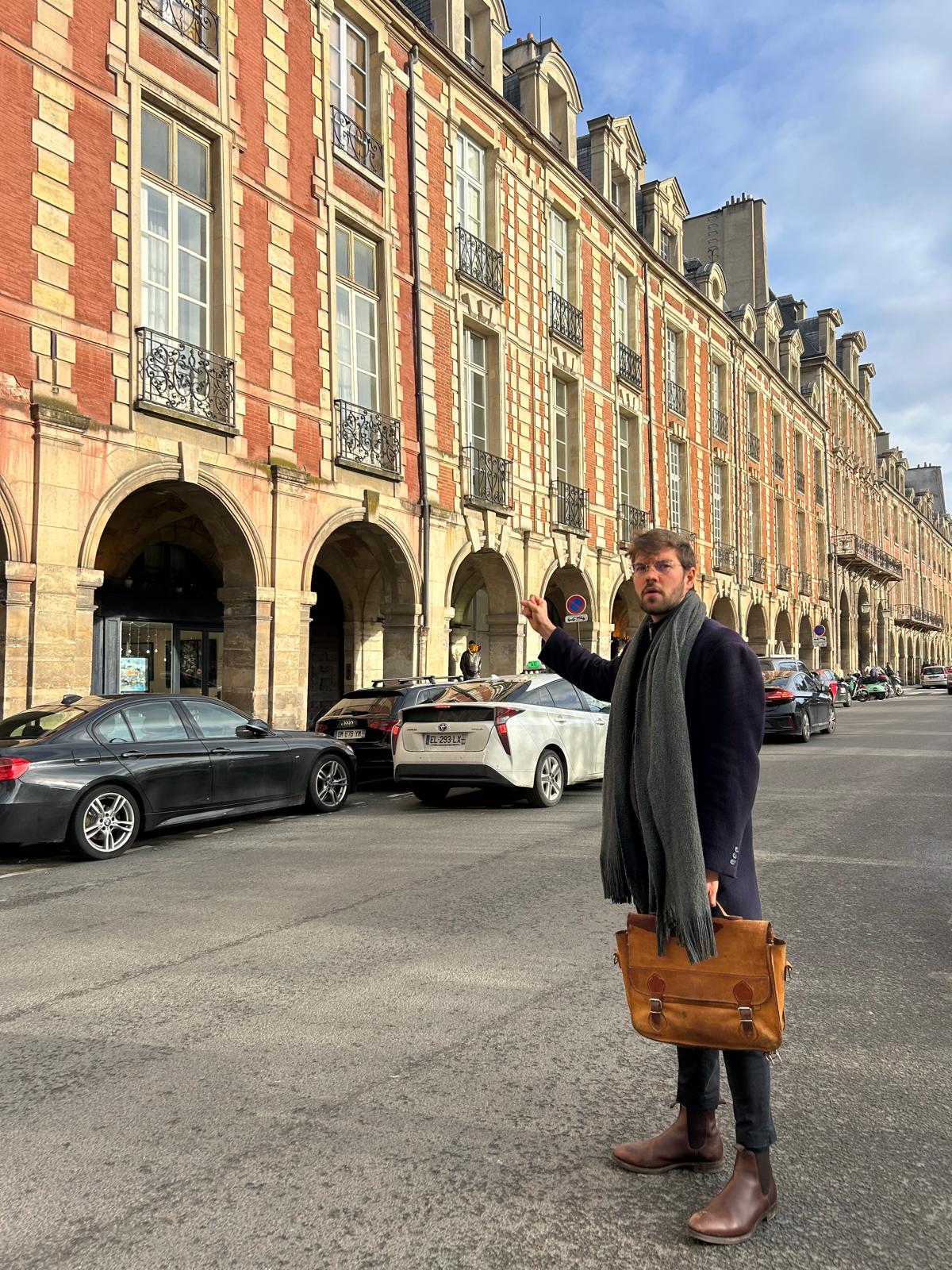
From his home on the Place des Vosges, Victor Hugo would undoubtedly have wandered through the Marais and made his way to Notre-Dame to admire the old cathedral. So let’s set off from here and follow in the author’s footsteps, retracing his journey through the pages of his novel.
Along the way, we’ll uncover hidden gardens, winding medieval passageways, the remains of a Gothic church hidden from the eyes of hurried passers-by, the maze-like streets of a former medieval village, remnants of the Philippe Auguste city walls and some of the oldest overhanging houses in Paris. Drawing on the intertwined fates of Esmeralda, Quasimodo, Frollo and Phoebus, we’ll also try to picture the bustle of medieval Paris: its carnival celebrations, the infamous Court of Miracles, animal trials and the division of the city into distinct neighbourhoods.
Above all, we’ll trace the history of Notre-Dame Cathedral, from its origins to its reconstruction. We’ll explore the extraordinary circumstances of its construction, its architectural achievements, the exquisite details of its design and the legends that still surround this magnificent vessel of stone.
The names of Maurice de Sully, Henry II, Viollet-le-Duc, Saint Louis, Saint Gudula and many others will accompany us throughout our journey.
Practical Information: Victor Hugo’s Paris Guided Tour
Plan Your Visit
Meeting point: 1 Place du Dr Antoine Béclère, 75012 Paris, between Mon Café and Café des Blouses Blanches (in front of Saint-Antoine Hospital).
End point: Place de la Bastille, 75011 Paris.
Public tour group size: Up to 10 participants.
Duration: 1 hour 30 minutes (up to 2 hours, depending on the group and walking pace).
Walking distance: 2.5 km.

Explore Further
Where to Eat
La Collective Parisienne – A welcoming canteen-style restaurant serving quality food at affordable prices.
(70 Rue François Miron, 75004 Paris)
Where to Grab a Drink
L’Ébouillanté – Tea room and restaurant with a lovely terrace on a gently sloping street.
(6 Rue des Barres, 75004 Paris)Louis Philippe – Café and restaurant, established in 1810.
(66 Quai de l’Hôtel de Ville, 75004 Paris)
Cultural and Historical Sites
Sainte-Chapelle – A jewel of French Gothic architecture.
(10 Boulevard du Palais, 75001 Paris)Conciergerie – Former palace of the governors and kings of France, and the last place where Marie Antoinette was imprisoned.
(2 Boulevard du Palais, 75001 Paris)Queen Elizabeth II Flower Market – One of the most beautiful plant markets in Paris.
(Place Louis-Lépine, 75004 Paris)